

 1
 12 Mins Read
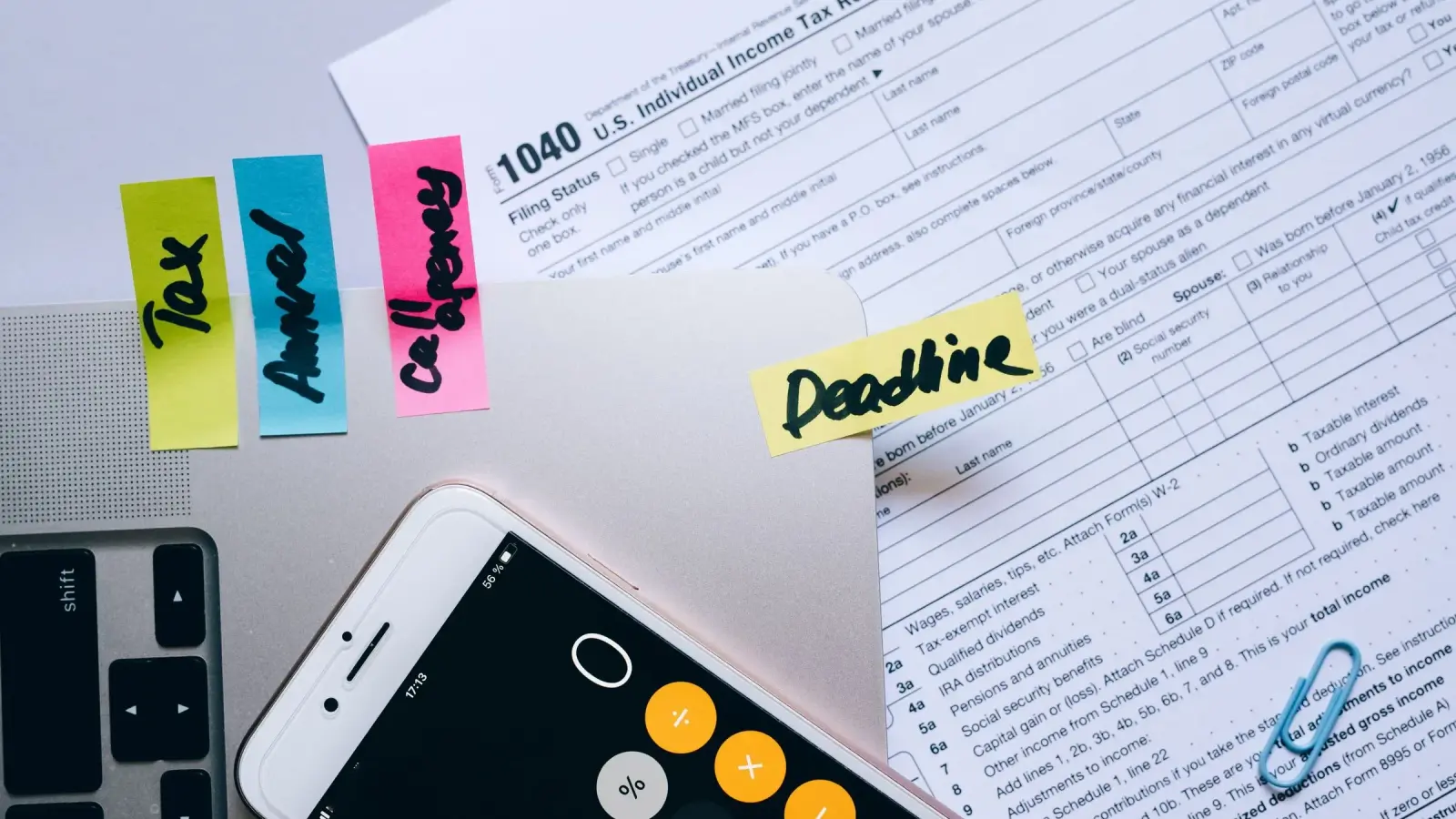
Whether your small business needs a bookkeeper comes down to a choice every new owner makes: keep the books yourself or pay someone. NerdWallet estimates the first takes an hour or two a week. Published 2026 prices for the second run from $189 to $2,500 a month.
A small business needs bookkeeping from the day it opens. But it doesn't always need to hire a bookkeeper right away. Many owners keep their own books with accounting software at first.
The IRS doesn't require you to hire anyone or use a particular system. According to the IRS, any system works if it clearly shows your income and expenses. So the real decision is who keeps those records accurate each month, you or someone you pay.
The first weeks: keeping the books yourself
At the start, you'll probably do it on your own, like many owners. In our work with clients, small startups usually use an online bookkeeping service and run it themselves at first. That keeps costs down while the volume is small. It works when someone actually opens the books every month.
Doing it yourself suits a business with few transactions and one owner. It also helps if you have no employees and no inventory. NerdWallet suggests planning for an hour or two a week. It also suggests talking to an accountant at least every few months.
IRS Publication 583 describes what a basic setup needs. It recommends opening a business checking account early and keeping it separate from personal money. QuickBooks lists mixing the two among the most common bookkeeping mistakes.
From the first sale, you keep these records:
- income records: deposit slips, invoices and the 1099-NEC or 1099-MISC forms you receive
- expense records for every business purchase
- asset and inventory records if you buy equipment or sell goods
You also pick an accounting method. Under the cash method, you record income when you receive it and expenses when you pay them. Under the accrual method, you record income when you earn it and expenses when you incur them.
If a business needs inventory to show its income, the accrual method is generally required for purchases and sales. Small-business exceptions exist. And reconciling against bank statements each month keeps errors from building up until tax season.
Picking a tool
A spreadsheet can be enough for a very small business. But most owners and bookkeepers work in accounting software. Regular prices in 2026:
Software | Plans and regular monthly price | Notes |
|---|---|---|
QuickBooks Online | Simple Start $38, Essentials $85, Plus $140, Advanced $340 | Free trial or first-months discount |
Xero (US) | Early $27, Growing $59, Established $97 | Early plan: 20 invoices and quotes, 5 bills |
Wave | Self-service from $19 a month | Price as listed by Block Advisors |
Xero's intro discount for new US customers ends November 2, 2026. Block Advisors sells Wave, which is where that Wave price comes from. Vendors change prices and end promotions often, so confirm the current price on the vendor's own page.
How long to keep what you collect
Your records will keep piling up, and the IRS sets how long they have to stay:
Situation | How long to keep records |
|---|---|
Most cases | 3 years |
Refund claimed | 3 years from filing or 2 from payment, whichever is later |
Employment tax records | At least 4 years |
Income left out | 6 years |
Securities or bad-debt loss | 7 years |
No or fraudulent return | Indefinitely |
The 6-year rule applies when you leave out more than 25% of the gross income on your return. The 7-year rule applies when you claim a loss from worthless securities or a bad debt.
What a bookkeeper for a small business does
After a few months, you know the routine well. It's the same work a bookkeeper would do for you. The US Bureau of Labor Statistics (BLS) describes it like this:
- recording transactions in software, spreadsheets or databases
- assigning each cost and payment to the right account, such as rent or software
- checking figures and reconciling the records against bank statements
- reporting any discrepancies
- tracking invoices and bills with their due dates
- preparing basic reports
NerdWallet says reconciliation usually happens monthly. The basic reports include a balance sheet (what the business owns and owes) and an income statement (profit and loss).
Many bookkeepers also maintain the general ledger, the main record of all accounts. In some businesses they prepare bank deposits and handle payroll. They may also send invoices and follow up on overdue accounts. Tax returns, tax planning and broader financial analysis are normally the accountant's work.
The month the books fall behind: signs you need help
Doing it yourself works while the volume is small and you keep up every month. The clearest sign that it's stopped working is that the books are behind. Reconciliation happens only when taxes are due, or not at all.
Personal and business money mixed in the same accounts is another sign. Separating them takes time and skill. Employees add more work too, with payroll tax deposits, payroll forms and their deadlines.
Estimated taxes are a common trigger as well. According to the IRS, you generally have to pay estimated tax if you expect to owe at least $1,000 after withholding and refundable credits. The 2026 due dates are:
- April 15, 2026
- June 15, 2026
- September 15, 2026
- January 15, 2027
Paying the right amount takes current numbers. The calculation for owners is explained in Self-Employment Tax: How It Works and How to Calculate It.
Selling goods from inventory often means accrual accounting, which takes more work. A lender or investor who asks for financial statements will expect clean, current reports. And say the books now take you more than an hour or two a week. If you'd rather spend that time on sales or clients, it's time to look at the cost of help.
Looking for help: bookkeeper, accountant or software
When you start looking, a bookkeeper is only one of the options you'll see. People often confuse these three, but they do different jobs. Many small businesses end up using two of them or all three.
Option | What it does | Typical cost | Suits |
|---|---|---|---|
Bookkeeper | Records transactions, reconciles, tracks bills, basic reports | About $250 to $1,000+ a month outsourced | Owners short on time or with growing volume |
Accountant | Analysis, statements, tax returns, tax planning | Depends on the task | Tax returns, tax planning, setup decisions |
Accounting software | Stores records, imports bank data, makes invoices and reports | About $27 to $340 a month | Do-it-yourself owners; bookkeepers as a tool |
The bookkeeper cost is NerdWallet's figure for outsourced service, and freelancers often bill by the hour. The accountant is sometimes a CPA and also advises on setup. NerdWallet says many small businesses consult one a handful of times a year. Software prices are regular prices.
ZenBusiness describes the difference this way. A bookkeeper tracks and documents day-to-day finances and may hold certifications. An accountant does more technical, big-picture analysis and has at least an accounting degree, sometimes with a passed CPA exam. FreshBooks names AIPB and NACPB among the certifications bookkeepers hold, along with the QuickBooks ProAdvisor program.
Choosing the tax professional is covered separately in How to Choose an Accountant for a Small Business.
The first prices: what a small business bookkeeper costs
Then you look at what help costs. There's no official average price for bookkeeping. Every figure below comes from a media site or a bookkeeping vendor. So treat them as ranges, not quotes.
Type of help | Published price | Source and date |
|---|---|---|
Outsourced service | $250 to $1,000+ a month | NerdWallet, March 2026 |
Outsourced basic bookkeeping | $500 to $2,500 a month | FreshBooks, October 2026 |
Online service | From $189 a month, plus $100 setup | Block Advisors, 2026 |
Freelancer, hourly | About $35 to $80+ an hour | NerdWallet; FreshBooks |
Part-time bookkeeper | $400 to $800 a month, no benefits | FreshBooks, October 2026 |
Full-time employee | $3,000 to $4,500 a month, no benefits | FreshBooks, October 2026 |
The detail behind each row:
- NerdWallet's tiers: basic $250 to $350, mid-range $500 to $700, premium $1,000+ a month. Online packages run about $200 to $700 and up.
- Block Advisors: Full-Service from $189 a month, Premium from $309 a month.
- Freelancers: the Upwork average is $43 an hour, and some charge $80+. FreshBooks puts self-employed bookkeepers at $35 an hour or more, depending on the state.
- Part-time: from $20 an hour.
- Full-time: $35,000 to $55,000 a year. Benefits can add up to 20% of salary.
For comparison, look at BLS data from May 2025 for bookkeeping, accounting and auditing clerks. Their median pay was $50,670 a year ($24.36 an hour). It's what employees earn, which differs from what an outside service charges. Some guides still quote the earlier BLS figure of $49,210.
Why the prices differ so much
The sources measure different things. One quotes an employee's salary and another a monthly service fee. Others give a freelancer's hourly rate or a vendor's starting price. Within each model, NerdWallet lists the same factors that move the price:
- An in-house employee costs the most. Virtual and online services usually cost less.
- Payroll, invoicing and tax preparation are often sold as add-ons.
- Experience and certifications raise the rate.
- Complexity raises it too: more transactions, more accounts and more reports.
- Location matters as well.
The catch-up bill
Bookkeepers usually charge a flat monthly fee, a project fee or an hourly rate for one-off tasks. Bringing old, incomplete books up to date is usually a separate project. NerdWallet cites one online provider, Bookkeeper360. Its onboarding and prior bookkeeping add-on costs $1,000 or more.
So if you hire help when the books are months behind, you pay for that catch-up work on top of the monthly fee.
Weighing the price against your own evenings
We made a rough comparison ourselves. We used NerdWallet's estimate of an hour or two a week for doing your own books and the Upwork average of $43 an hour.
An hour or two a week comes to 52 to 104 hours a year. A freelancer at $43 an hour would charge about $2,236 to $4,472 a year for the same work.
Say an hour of your time on sales or clients brings in more than that rate. Then paying someone for the books usually pays off. If it doesn't yet, doing them yourself saves real money in the first year.
Before you sign: what hiring costs beyond the fee
Hiring solves the time problem, but it brings its own costs. The points in this section are partly our own reasoning.
- Even basic services cost a few hundred dollars a month, and cleanup is billed on top.
- A bookkeeper needs access to bank feeds, cards and documents. Ask how that access is protected.
- Quality varies. Since titles are used loosely, experience tells you more than the job title does.
- Contract terms matter. Block Advisors' footnote says its rates can change at any time, so read the terms on price changes and cancellation before you sign.
- The tax return stays your responsibility after you hire someone.
- Owners who hand everything over can stop reading their own reports.
What software can and can't take over
You may also wonder whether you need a person at all. AI features in accounting software now handle much of the routine work. Two sources describe these tools: Yeo & Yeo, a CPA firm (March 2026), and a June 2026 article in Accountants Daily. The tools can categorize transactions and pull data from receipts. They can also match entries to bank feeds and flag unusual or duplicate items.
Both sources also say the tools need human oversight. A person still has to review the output and clean bad data. Someone also has to apply tax rules and make judgment calls. The software can't assess a tax position or sign off on reporting. Both authors sell accounting or bookkeeping services themselves.
The BLS projects that jobs for bookkeeping, accounting and auditing clerks will fall 6% from 2025 to 2035. That's a loss of about 85,600 jobs. The BLS still expects about 144,100 openings a year to replace workers who leave.
The BLS doesn't name AI as the cause. For a small business, AI features make doing your own books less work. But someone still has to check them.
Handing over your records
Whoever ends up keeping the books, the work goes faster when your paperwork is in order. A bookkeeper can only work with the documents you provide. So keep these in one place from the start, whether you hire now or later:
- business bank account and card statements from the first day
- your EIN, the federal tax number of the business (see What Is an EIN (Employer Identification Number)?)
- formation documents such as the Articles of Organization and the operating agreement
- invoices, receipts and any 1099 forms you received
- payroll and contractor details if you pay people
- a list of the tools you use, such as payment processors, accounting software and online stores
- records of loans and of money the owner put into or took out of the business
If you own the LLC from abroad
If you live abroad and own a single-member US LLC, bookkeeping is a legal requirement with a large penalty attached. The IRS instructions for Form 5472 cover a foreign-owned US disregarded entity, meaning an LLC wholly owned by a foreign person. It files Form 5472 with a pro forma Form 1120 when it has a reportable transaction with a related party.
The pro forma 1120 is mostly blank. Only the name, the address and items B and E on page 1 are required.
The entity must also keep permanent books and records. They have to support its federal return and its related-party transactions. These are the penalties:
- $25,000 for failing to file Form 5472 on time
- the same $25,000 for failing to keep the required records
- $25,000 more for each related party for each 30-day period, if the failure continues over 90 days after an IRS notice
- possible criminal penalties
A substantially incomplete form counts as not filed. A foreign-owned disregarded entity can't e-file Form 5472, so it sends it by fax or mail. It's due on the same date as the attached Form 1120, and Form 7004 extends the deadline.
Monthly books are what make this filing possible. Every transfer between the owner and the LLC has to be reported correctly. The filing itself is covered in Form 5472 for Foreign-Owned US LLCs: Who Must File, Due Date and Penalties.
The first conversation: questions to ask a bookkeeper
If you decide to hire, a short conversation up front saves trouble later. Before you sign with a bookkeeper, ask these questions:
- Have you worked with businesses of my size and industry?
- Which accounting software do you use?
- Will I own the account and the data?
- How do you set the price (monthly, hourly or by project), and what would change it?
- Which reports will I get, and how often?
- How do you access my bank data and store my documents?
- Who reviews your work?
- Do you work with an accountant who prepares the tax return?
- What training or certifications do you hold?
Get the scope in writing. It should say which tasks are covered each month and which are extra. Extras often include payroll, cleanup and invoicing. If you're a foreign owner, also ask whether the bookkeeper knows the Form 5472 record-keeping rules.
What to do this month
Open a separate business bank account if you don't have one yet. Then decide who will reconcile the books each month, you or someone you pay.
If you do them yourself, note how many hours they really take for a few months. When that time starts to cost you sales or client work, compare it with the prices above and ask for quotes. If you own a US LLC from abroad, talk to an accountant about the Form 5472 records early.
Clean books tell you how the company is doing. The public side is separate, and for new owners we take it on: social media pages, directory listings and a landing page.
Frequently asked questions
Does a small business need a bookkeeper?
It needs bookkeeping, though not always a hired bookkeeper. The IRS requires records that support your income and deductions, but no particular system. Many owners hire help once they can't spend an hour or two a week on the books, or the books get complex.
What does a bookkeeper do for a small business?
A bookkeeper records transactions and reconciles accounts against bank statements, usually monthly. They also track invoices and bills and prepare basic reports. Some handle payroll and bank deposits too.
How much does a bookkeeper cost for a small business?
NerdWallet (March 2026) gives about $250 to $350 a month for basic service, $500 to $700 for mid-range and $1,000+ for premium. FreshBooks (October 2026) gives $400 to $800 a month part-time and $500 to $2,500 for outsourced basic bookkeeping.
Can I do my own bookkeeping?
Yes. Use accounting software or a spreadsheet and keep a separate business bank account. Plan for an hour or two a week, with an accountant check-in at least every few months.
What is the difference between a bookkeeper and an accountant?
A bookkeeper keeps the day-to-day records. An accountant analyzes them and prepares financial statements and tax returns. They also plan taxes. An accountant may also be a CPA.
Is AI replacing bookkeepers?
AI now handles much of the routine work, such as categorizing transactions. But it still needs human review. It can't sign off on tax positions. The BLS projects the occupation to shrink 6% from 2025 to 2035 without naming AI as the cause.
What are the downsides of hiring a bookkeeper?
The main ones are the monthly cost and giving someone access to your financial data. Quality is uneven because titles are used loosely, and contracts may allow price changes. You also stay responsible for your tax return.
Does a foreign-owned LLC need bookkeeping?
Yes. A foreign-owned single-member US LLC must keep permanent books and records. The IRS penalty for failing to keep the required records is $25,000.
 Davit Gogia






 15 Mins Read